

The launch comes as 5G is poised to introduce support for applications that demand ultra-low latency—the time it takes for a signal to travel around the network and back. By distributing applications across Multiple Access Computing (MEC) Edge locations at the network's edge, closer to mobile users, signals travel shorter distances, dramatically reducing latency. Cloud RAN architectures enable this new class of time-sensitive applications by distributing certain RAN functions to the same MEC nodes at the network edge. Scalable, ultra-low-latency, and deterministic mobile transport is required to meet the stringent infrastructure demands of Cloud RAN architectures and the heightened user experience expectations of time-critical 5G services.
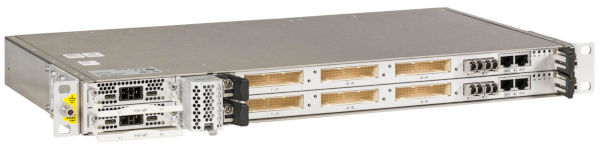
By employing strict traffic prioritization and frame preference, the 1830 TPS creates deterministic routes across a switched Ethernet network. Such determinism was previously unavailable in packet-switched networks and is essential for ensuring the reliable delivery of critical traffic with stringent latency requirements. High-precision synchronization provides accurate timing for 5G radios, while leveraging Nokia RAN's expertise in Common Public Radio Interface (CPRI) sequence mapping allows the 1830 TPS to achieve nearly 40% greater bandwidth efficiency than competing alternatives.
As 5G networks are deployed, they will often coexist with existing 4G networks, requiring a mobile transport solution that addresses multigenerational rates and protocols. With Radio over Ethernet encapsulation, the 1830 TPS can carry legacy CPRI transmissions alongside native Ethernet traffic, including eCPRI and traditional backhaul traffic, to a unified, time-sensitive network.






