
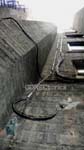
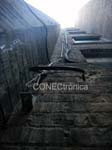
The use of single-fiber cable bundles (left) or pre-engineered pre-connectorized cables with multiple fibers (right, where they are installed alongside existing CATV cables) represents two good options for MDU cable installation on the exterior of the building.
MDUs for undeveloped land tend to be relatively simple, as FTTH cabling is installed at the same time as other cabling. The challenge arises with existing buildings (existing developments) or redevelopment areas that may not have enough vertical pathway space and may require the installation of horizontal pathway systems in corridors.
Before identifying technologies that would work well in MDU deployments within existing buildings, it would be very helpful to classify MDUs, as the term can be used to describe buildings ranging in size from a duplex to a skyscraper. The classification can be as complex as the network designer desires, but there are at least three considerations that can help capture most MDUs:
- Building size (number of floors and number of dwelling units per floor)
- Indoor or outdoor deployment of risers
- Factory pre-terminated or field-terminated cabling
What size is it?
The first and most obvious way to classify an MDU is by size. Small, medium, and large are basic classifications that can be used—but what determines one MDU's size compared to another? Small MDUs are generally one to three stories and are typically wired the same way as individual dwelling units, meaning single-fiber drop cables connected independently to each dwelling unit. This approach is known as a "direct drop" solution. Duplexes and MDUs where all units share the ground floor can have single-fiber drop cables installed from a consolidation point, but even MDUs up to four stories could be candidates for a direct drop solution.
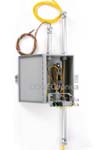 Medium-sized MDUs are typically four to ten stories high. They are more likely to have a telecommunications room or basement space containing a demarcation point between the incoming feeder cable and the rest of the MDU cabling. Whether the MDU has a fiber distribution hub (FDH) and optical splitters depends on the total number of dwelling units and the overall system architecture.
Large MDUs are typically more than 10 stories, but an MDU with fewer than 10 stories could be considered large if it has more than eight residential units per floor. A large MDU will have a dedicated FDH (exterior or interior) and optical splitters to serve the building.
As this implies, another consideration in classifying the size of an MDU is the number of dwelling units per floor. Compare, for example, a four-story MDU with 12 dwelling units per floor to a four-story MDU with only four dwelling units per floor. The MDU with 12 dwelling units per floor is a simple, medium-sized design that will benefit from having a pre-terminated, multi-fiber horizontal cable running through each aisle and connected to a multi-fiber vertical cable via a riser. However, the MDU with four dwelling units per floor cannot have a traditional aisle on each floor and may be better suited to a direct drop solution.
Therefore, there are no absolute definitions for MDU size, and there will be overlap between categories based on the characteristics of a specific MDU. However, this classification allows designers to begin creating solution groups for various types of MDUs.
 Indoor or Outdoor?
The second factor in determining the correct MDU cabling approach is the placement of the riser cables. While it seems natural to run the risers in an indoor riser conduit, the option of running the cabling outdoors shouldn't be discounted. For example, older MDUs won't have a suitable internal pathway. One option in this scenario is to install a new pathway by drilling through each floor. That's clearly expensive and time-consuming. Moving the riser cable outside the building in the facade can be an attractive alternative.
Many MDUs are prime candidates for external cable routing because the sides or part of the rear of the building are hidden from view. Furthermore, many MDUs already have existing electrical or telecommunications cables on the building facade.
In cases of external deployments where cables might be considered unsightly, they can be concealed with molding systems, which are manufactured in color, painted to match the facade, or even designed to resemble rain gutters. These molding systems also provide an additional layer of physical protection.
Successful installation of the vertical cabling component outdoors requires the use of products manufactured for outdoor applications (e.g., with water-blocking and UV-resistant coatings). Three options are available for facade deployments:
- Single-fiber Outside Plant (OSP) drop cables. In this direct drop solution, each cable runs independently vertically and horizontally along the building facade from a distribution terminal to the dwelling unit. This approach works particularly well for MDUs up to three stories.
- Bundled single-fiber cables. Single-fiber drop cables are bundled by the manufacturer and staggered at standard intervals (e.g., the distance between floors). The end of each cable is factory-terminated with a connector (typically SC-APC) and hung vertically on the side of the building so that each cable in the bundle is aligned to feed the dwelling unit. These bundles are intended to connect one dwelling unit per floor. For example, if an MDU has four dwelling units per floor, then four bundled riser cables would be needed. This approach works well for MDUs up to six stories and when there aren't many dwelling units per floor (ideally four or fewer).
- Pre-terminated cables, pre-engineered with multiple connectors. This uses cable with multiple fibers accessed at the factory at standard intervals (e.g., the distance between floors). Fibers at each access point are confined within a tie. The end of the tie is terminated with a multi-fiber connector that holds up to 12 fibers. The connector is attached to a pre-terminated cable in the hallway that connects each dwelling unit. This approach works well for MDUs up to 12 stories and up to 12 dwelling units per floor. An MDU with more than 12 dwelling units per floor would require more than one pre-engineered, pre-terminated riser cable.
New developments in indoor risers:
If an indoor riser is available, specific MDU products that only need to be plugged in not only eliminate most or all fusion splicing and speed up deployment, but also require minimal fiber experience from installation technicians.
In a basic setup, a riser terminal is located on each floor. The terminal provides connectivity between pre-terminated riser cables and pre-terminated horizontal cables in the hallways. In a fully terminated system, the riser cable (with factory terminations at each end) is pulled up or down the riser and connected to the riser terminal above ground level and to the internal fiber optic distribution frame (FDH) in the basement. Although a riser cable may be required for each floor, riser cables can be very small in diameter (e.g., 0.14 inches/3.5 mm) and contain 12 or 24 fibers per floor. Many of these riser cables can be installed in small 1.25-inch conduit pathways.
Storage of Excess Cable:
Although fully connectorized products can speed up deployment, the biggest hurdle is managing the excess cable. Precise measurements—with a little extra length for safety—are necessary to ensure the cable doesn't fall short. Furthermore, custom lengths tend to take longer to manufacture, and installation teams must take extra care to ensure the correct cable is installed on each floor.
Fortunately, manufacturers have developed ingenious products that solve these problems. Pre-terminated riser cables are packaged on collapsible reels or rotating spools that provide the exact cable length needed. The remaining cable is permanently stored in the hardware. This allows the service provider to maintain a small inventory of product configurations that meet the vast majority of MDU needs.
 Hallway Deployments:
Most medium and large MDU buildings have a hallway on each floor—this is where the horizontal cabling will be run to “pass” each dwelling unit. Many existing MDUs will require horizontal cabling to be placed in a molding system to protect and conceal the cables. There are many types of plastic molding systems, ranging from the very utilitarian to the decorative. In older MDUs, a molding system is likely already in place. As long as there is space, the new horizontal cables can be run inside this molding.
For simplicity, horizontal multi-fiber cables can be pre-terminated at the end that connects to the vertical terminal. The fibers at the pre-terminated end can be terminated with single-fiber or MPO multi-fiber connectors for quick connection and reduced hardware size requirements. Furthermore, these connectors are increasingly available in low-loss versions (<0.35 dB) and with factory-cleaned and sealed configurations that require no cleaning after the initial connection, making for a true plug-and-play installation.
The end of the riser cable that delivers to the dwelling unit is not pre-terminated to allow the installer to terminate the fiber at the desired location. Termination can be completed by installing a field-installable, non-epoxy/unpolished connector or by splicing a pigtail (a short, flexible cable with connectors).
Once the fiber is terminated, the dwelling unit is officially "passed." When a tenant requests service, a hole is drilled in the dwelling unit, and a jumper cable is installed from the connector in the hallway to the ONT (Optical Network Terminal) or fiber wall outlet inside the dwelling unit.
In the basement,
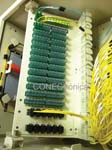
the final segment of the MDU installation is the transition from the riser cables to the field distribution cable. The number of housing units in an MDU and the system architecture generally determine whether the splitters will be installed in the MDU or higher up in the network. Large MDUs may contain internal FDH cabinets that can house splitters. In smaller MDUs, more compact distribution boxes containing smaller splitters (e.g., 1 x 4) work well for open, distributed architectures.
MPO connector technology has also found its way into indoor FDH cabinets. Multi-fiber risers can be equipped with MPO connectors at the basement end for direct connection to the indoor FDH. Fully connectorized splitter modules for quick splitter installation complete the plug-and-play product lineup.
Splicing vs. Pre-Terminated Cables:
One final aspect to consider is labor. When skilled labor and fusion splicers are available, a fully spliced system may make sense. Keep in mind, however, that installation may take longer than a pre-terminated system would. In these situations, non-MDU-specific components can also be used.
When skilled labor and fusion splicers are unavailable, deployment speed is critical, or disruption from adding service to a tenant is important, factory pre-terminated cabling can provide a simple way to install cable in an MDU quickly.
Cable splicing can involve fusing single-fiber cables, as with direct drop solutions for small MDUs, or splicing ribbon cables in larger MDUs. In large MDUs, the internal vertical space may house a single multi-fiber riser cable that is accessed midway on each floor for splicing to the horizontal cables. Another option is to install multiple risers—one to each floor or one feeding multiple floors—and splice them to the horizontal cables.
In summary,
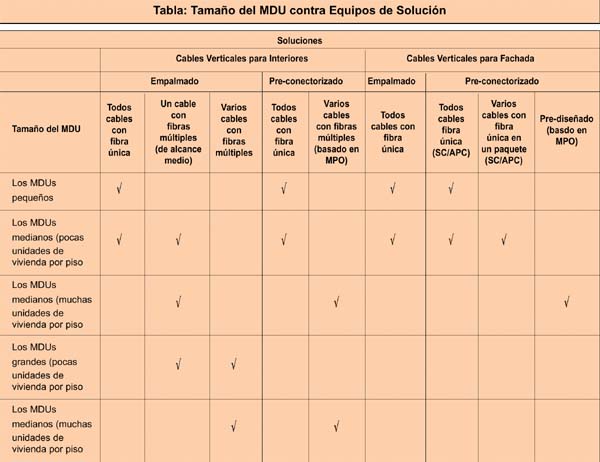
now that we have created categories of MDUs and identified tailor-made products for each of them, a matrix such as the one shown in the table above can help the designer select the appropriate options for each MDU found.
Although each MDU may be different, it is possible to classify them into general categories with specific products and solution equipment created for each category. By applying the principles outlined above, anyone can use their own criteria to classify MDUs and their preferred products to create a similar matrix that will address the vast majority of MDUs in their network.
Michael Watson is a Systems Specialist and Steven Colby is an Installation Specialist at Corning Cable Systems.
Author:
By Michael Watson and Steven Colby. Published in Lightwave





