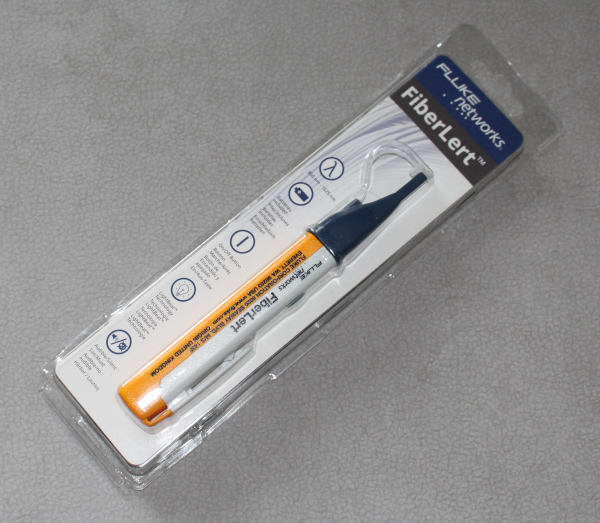
Designed for one-handed operation, the FiberLert™ is an easy-to-use troubleshooting tool that allows technicians and engineers to easily check for the presence of near-infrared light without complicated setup or interpreting measurement data. When placed in front of an active fiber optic port or patch cable, the tester emits a continuous light and an optional tone. This tool is unique in the market, enabling users to pinpoint the cause of communication failures in fiber optic networks.
 Fiber optic networks carry a significant amount of data, and problems that arise can affect many users, making a quick resolution essential.
FiberLert eliminates guesswork by clearly indicating where a signal is active and where it is not. This allows users to pinpoint and troubleshoot the cause of a problem, such as a faulty transceiver or patch cable, and replace it. FiberLert is compatible with single-mode, multi-mode, and UPC/APC ports and patch cables and can perform tests without touching the port or cable, reducing the risk of contamination or damage. FiberLert's LightBeat™ feature flashes the LED, indicating that it is powered on and has sufficient battery life. A timer automatically shuts off the tester after five minutes of inactivity to extend battery life. Its rugged design includes a convenient pocket clip and comes with a two-year warranty.
Characteristics
Optical interface: Non-contact ceramic ferrule. Fits directly into 1.25 mm LC receptacles. Anchored ferrule adapter for testing 1.25 mm ferrule patch cables. Supports single-mode, multi-mode, UPC, and APC connectors and ports.
Wavelength detection: 850 nm to 1625 nm
Optical power detection range: From +3 dBm to -30 dBm
Light detection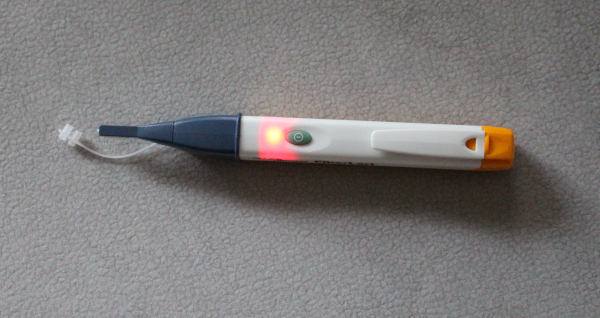
- Solid red LED indicator visible when optical power is detected
- Lightbeat™ indicator flashes twice every two seconds when the unit is powered on and the battery power is sufficient.
Batteries: 2 AAA alkaline batteries included.
Battery life: Typically more than 1 year (5 hours of use per week).
Size: 1.6 x 2.5 x 16.8 cm.
Weight: 59 g.
Operating temperature range: -10°C to 50°C.
Operating humidity range: 95% (10°C to 35°C) non-condensing, 75% (35°C to 40°C) non-condensing, uncontrolled, <10°C.
Operating altitude: ≤ 3000 meters.
Storage temperature: -20°C to 50°C.
 Usage:
There are different techniques for checking for a fiber optic fault, for example, in a cable entering a home because it is damaged or improperly installed with an excessive bend. Or, for example, in a fiber optic connection to communications equipment.
Sometimes, we can spot the problem with the naked eye, by observing how the cable is positioned or if there are any breaks in the sheath, but most of the time we'll need equipment to verify that the fiber optic cable is still transmitting reliably.
Ideally, we'd have an easy-to-use, affordable device that checks optical power in single-mode and multi-mode, APC and UPC, doesn't require configuration each time we use it, and provides quick and easy-to-interpret results. It should even be able to operate without direct contact with the fiber optic connection, thus avoiding the risk of contamination or damage. And it should be usable on communication ports and patch cords.
Advantages:
- We only need two AAA batteries for operation.
- We can quickly check the polarity, activity, and connectivity of the fiber optic cable.
- The light and tone indicate an active fiber optic cable without needing to make contact and contaminate the end.
- It can detect from 850 to 1625 nanometers. 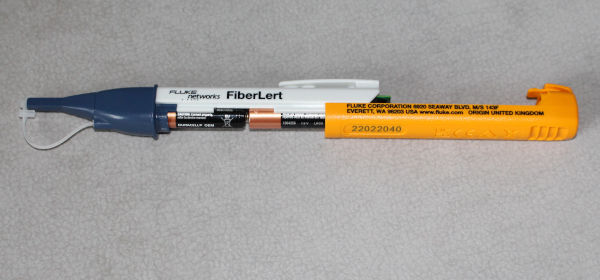
Conclusions:
FiberLert is a pocket-sized fiber optic tester, almost the size of an Eddin marker. The main detector component is located at the tip and has a protective cover where the fiber to be tested is placed.
After 5 minutes of inactivity, it will automatically turn off.
It is an economical tool compared to other tools on the market.
Due to its speed of use, we estimate that with daily use, the batteries could last a couple of months.
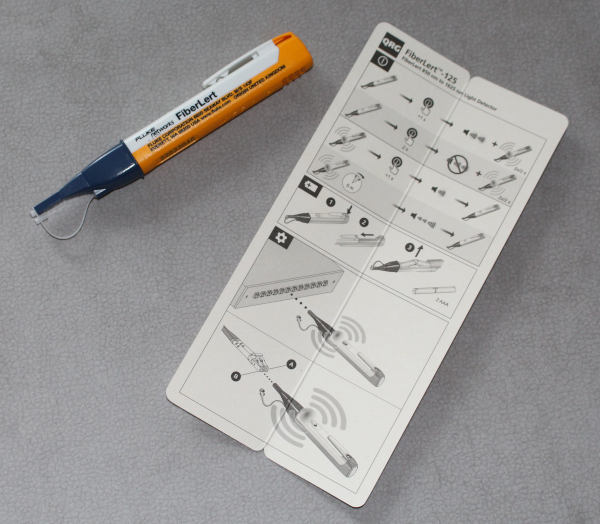
The package includes a sheet with images showing how to use the FiberLert tester and its applications, as well as another sheet with safety information and warranty details.
To test a fiber optic cable, simply press the button for less than a second until you hear a beep and see the light start to flash. Remove the cover and bring the cable close to the tip, without the ends needing to touch.
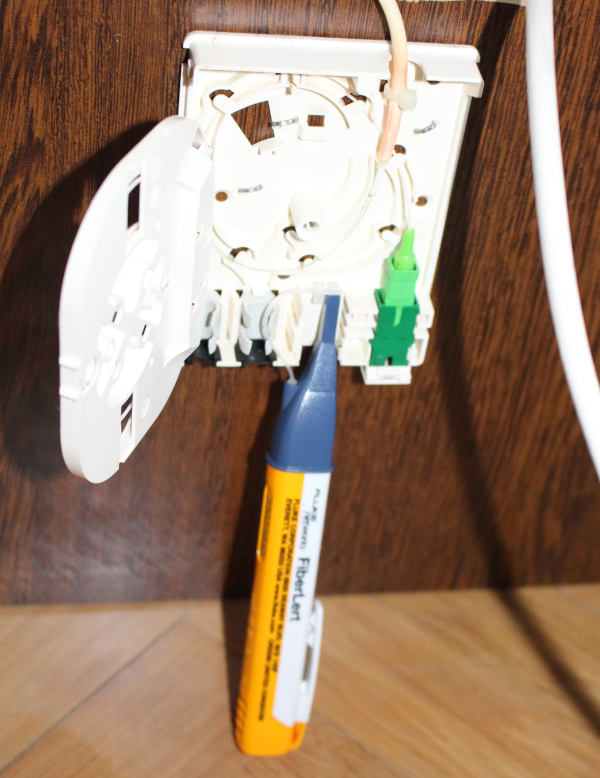
You can also test a transceiver by bringing the tip close to both poles.
With a simple touch, we turn off the Fiberlert and replace the cover, preparing it for the next test.
In just 3-4 seconds, we can test on-site whether a fiber optic cable is in good condition, as well as check any connection in a communications rack, at the installation site, or anywhere else we need to, without having to carry heavy, bulky equipment—it only takes up about the space of a pen.