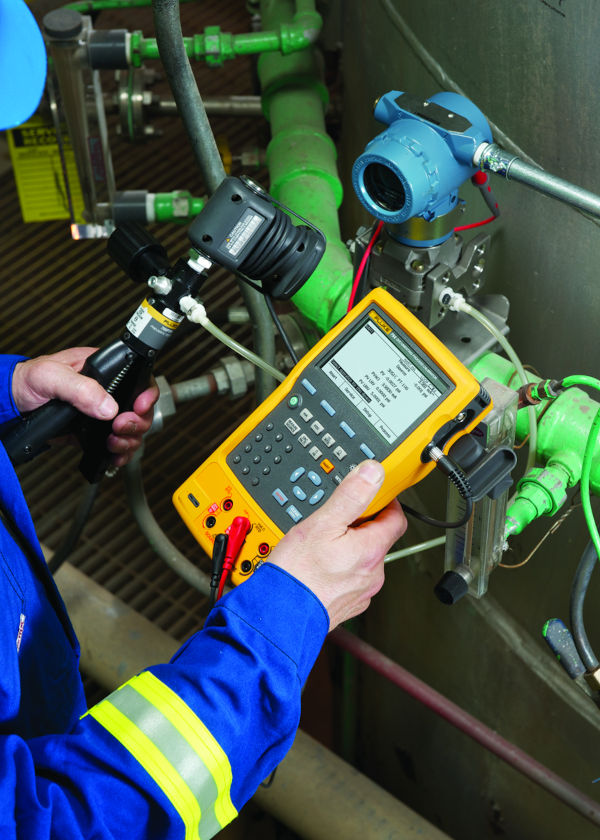
As a protocol chosen by numerous users for many years, HART has supplied data to programmable logic controllers and monitoring systems via a two-wire point-to-point connection. If the installation requires many process sensors and transmitters, point-to-point wiring becomes much more difficult. Changes to the HART interface have enabled the installation of sensors using multipoint buses to simplify wiring and allow readings from a set of sensors placed along a single cable. However, since this version of the bus uses the same underlying protocol, data transfer is relatively slow.
 Advances in digital networks
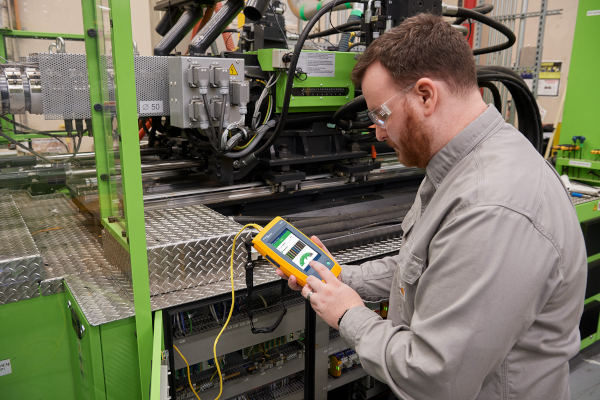
Many users will find it more advantageous to use newer technologies that leverage advancements in digital networks: WirelessHART and HART-IP. WirelessHART accesses the same unlicensed 2.4GHz spectrum used by WiFi and Bluetooth but employs a protocol developed for industrial communications. The same TSMP (Time Synchronized Mesh Protocol) supports very low power consumption by allowing sensors to disconnect when they are not expected to establish a connection. Its mesh design also allows data packets to pass from one wireless node to another, a technique that helps extend network coverage. This can be crucial in systems covering large areas where fixed cabling is impractical.
HART-IP leverages the standard IP stack to enable HART message transmission over various Ethernet types, including versions designed for intrinsically safe operation in hazardous environments, as well as Wi-Fi. Using IP allows for handling fieldbus data alongside other protocols, facilitating the integration of PLCs and sensors into unified SCADA systems on a single backbone network. Adding WirelessHART support will further enhance fixed network coverage.
Calibration is paramount
Regardless of the underlying communication protocol, calibration is a vital aspect of system installation and maintenance. This process used to be handled by an engineer using a professional calibrator on the transmitter. Calibration is performed after physically connecting the instrument to the analog inputs and data port. Instruments like the Fluke 754 Process Calibrator and Documenter provide menu-driven workflows to verify that the transmitter is functioning correctly; it does this by sending accurate data and recording the results.
The adoption of WirelessHART and HART-IP will entail changes in how the calibrator accesses data sent by the transmitter over the network. To ensure that the engineer sees the same information sent to the PLCs or SCADA systems, they will need to access the network to receive these packets. When the transmitter sends data using WirelessHART, it makes sense to have an adapter module for a calibrator that connects directly to interfaces with protocols such as WirelessHART.
Effective diagnosis of network problems
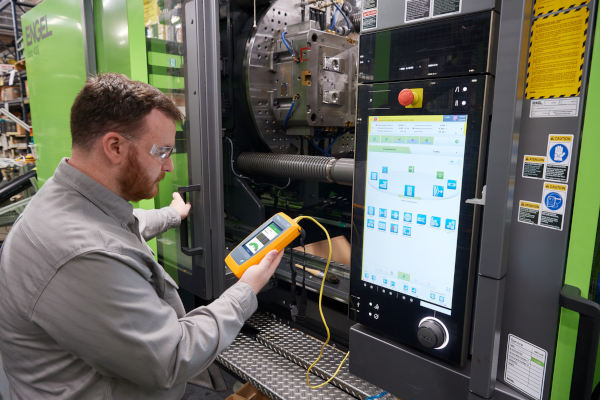
Users could also choose to leverage the ubiquitous nature of IP to transmit packets to a portable device via a network gateway. This mode of operation will also be useful for verifying the flow of information from each recalibrated transmitter. The increased complexity of the network architecture makes it important for technicians to understand how to troubleshoot issues that could prevent proper data reception. A network protocol analyzer, such as the Fluke Networks LinkIQ Cable and Network Tester, which can diagnose many network problems, including cable breaks and router misconfigurations, will become an important tool for maintenance engineers alongside the calibration team. To ensure the future needs of this community are met, Fluke is investing in tighter integration of protocol analysis and sensor calibration, ensuring that process engineers can perform their tests quickly and efficiently, applying the most appropriate strategies for their business.
Author: Eric van Riet, Head of Strategic Support and Training – LMS Admin, Application Engineering and Technology, Fluke