Ficosa CEO Javier Pujol emphasizes: “We have been proud to lead this pioneering international project, on which we have been working for over three years.” He adds: “The Connected Police Car represents a significant advancement by allowing law enforcement officers to carry out various procedures without needing to be at the station, while also providing them with new tools that facilitate their work with the aim of improving public safety.”.
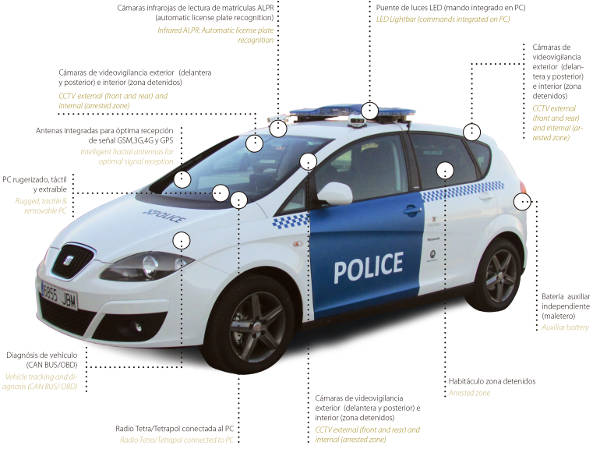
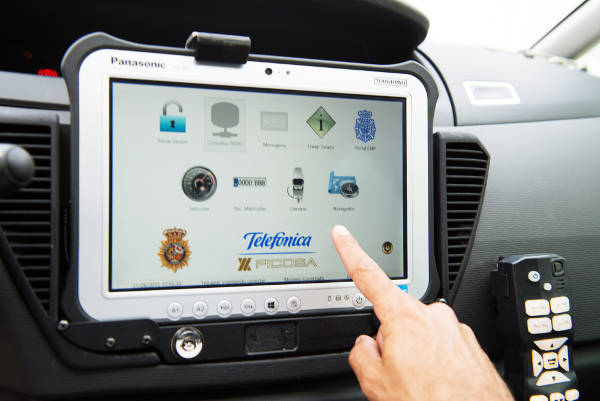 Ficosa has incorporated multiple state-of-the-art solutions into the patrol car. Specifically, the vehicle's center console is equipped with a 10-inch touchscreen laptop, notable for its exceptional durability and ability to withstand adverse conditions such as rain, extreme heat, and more. Furthermore, Telefónica's 3G and 4G connectivity allows the device to send and receive images and videos in real time between the patrol car and the police station.
On the other hand, using an automated license plate recognition (ALPR) system, officers can detect if nearby vehicles have been stolen or are on suspect lists. This solution digitizes and encodes license plate images, simultaneously comparing them with police databases for verification.
This smart vehicle also integrates three video surveillance cameras located at the front, inside, and rear. These cameras can record any activity within their field of view and allow officers to generate an alert if any unusual situation is detected, facilitating the subsequent retrieval of the recorded video. Ficosa has also included an integrated antenna system with fractal technology that improves connectivity within the vehicle.
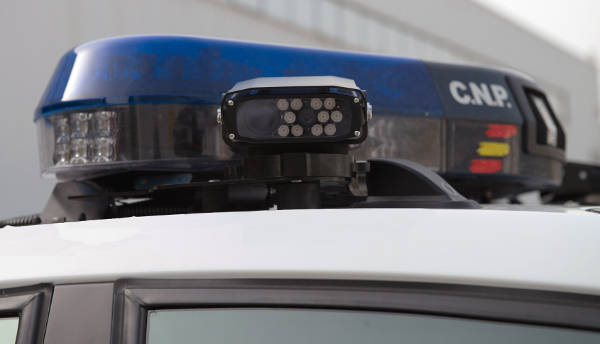 The Connected Police Car project, currently in its pilot phase, already has seven vehicles operating in the provinces of Madrid, Zaragoza, and Valencia. Following this trial period, it is expected that between 150 and 200 connected patrol cars will be deployed throughout Spain.