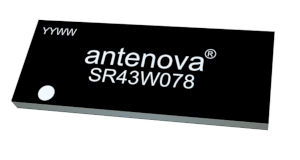
The SMD antenna, codenamed Billi, part number SR43W078, measures 15 mm x 6 mm x 1 mm and requires only 1 mm of PCB clearance. This makes it an exceptionally low-profile antenna solution for thin devices with limited antenna space. In testing, this antenna demonstrated very high efficiency across all three bands. It is suitable for pick-and-place manufacturing processes.
The FPC antenna, codenamed Lotti, part number SRF3W077, is a flexible antenna measuring 30.0 x 8.0 x 0.15 mm. It features a self-adhesive mount for easy integration into small designs. This antenna does not require a ground plane on the PCB and also demonstrated very high efficiency in testing.
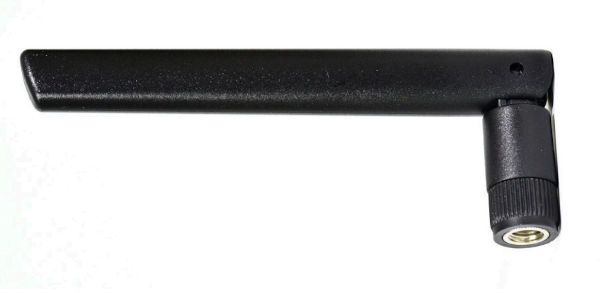
 The third new antenna is Nitida, part number SRE3W084, an external mounting antenna. It comes with an SMA connector and is available in a waterproof version. This antenna is easy to add to a design because it does not require a matching network.
Wi-Fi 6E brings faster networks with greater capacity, delivering better online experiences and supporting simultaneous communication to many endpoints with enhanced security. Wi-Fi 6E will make wireless networks in the office and smart home feel as fast as Ethernet.
Wi-Fi 6E adds the extra channels of the less congested 6 GHz radio band to carry even more data. It provides the speeds needed to support 4K and 8K video, online gaming, Smart TV, and video calls, and can support many connected IoT devices at scale. Wi-Fi 6E will complement 5G cellular services and is expected to become the standard in healthcare, education, sports, and entertainment markets where networks have a large number of concurrent users.
Michael Castle, Product Marketing Manager at Antenova, explains: “These antennas will be ideal for high-performance wireless devices that combine mobility with high performance, such as Wi-Fi 6 and Wi-Fi 6E routers and USB dongles, game consoles, set-top boxes, surveillance cameras, networked IoT devices, and MIMO systems. The Lotti and Nitida antennas connect directly to a printed circuit board, simplifying integration and shortening the design cycle.”
The emerging Wi-Fi 7 standard will also utilize the 6 GHz band, so manufacturers who choose one of these antennas now will be well-positioned to deliver ultra-fast Wi-Fi 7 speeds in the future.