Wireless terminal for easy integration
Janus Remote Communications announces the launch of the Terminus GSM864Q Open Frame. The Terminus Open Frame module's design allows for easy integration into custom devices or existing designs.


 By Carlos Martinez
 Idrica has developed the first 5G-NR device specifically for the water sector based on 5G-NR (New Radio) technology, and makes it possible to address challenges that were previously not possible in Massive IoT scenarios, with millions of devices connected in very small areas.
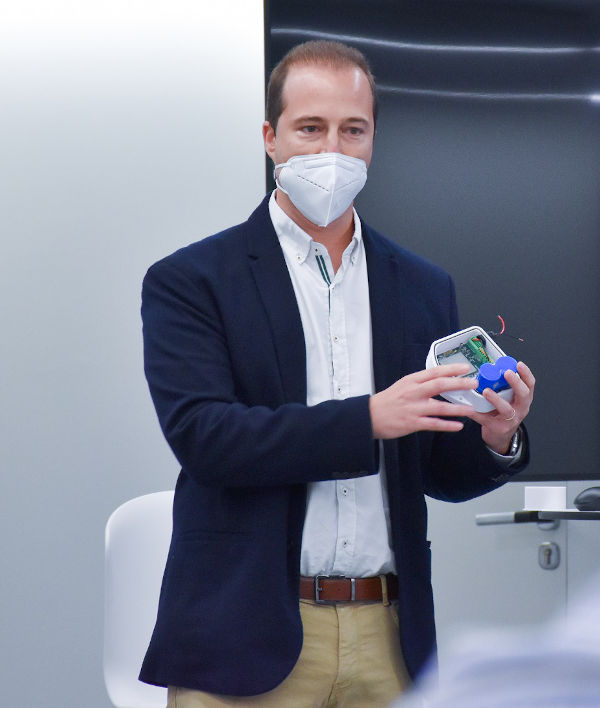
Janus Remote Communications announces the launch of the Terminus GSM864Q Open Frame. The Terminus Open Frame module's design allows for easy integration into custom devices or existing designs.
The 1 STOP SOLUTION method links intelligent production machines and enterprise software to overcome limitations in information exchange in an advanced M2M environment.
In recent years, the proliferation of high-speed communications infrastructure and...
Siemens Industry Automation has improved the performance and equipment of its handheld devices for wireless operator control and machine and plant control, and has also increased them with additional functions.
Avnet Embedded, an Avnet, Inc. company, announces the availability of a new generation of Cinterion GSM/GPRS terminals that offer greatly improved functionality while maintaining full compatibility with previous models.
BroadForward, a software company based in the Netherlands, has announced that its BFX gateway is now fully operational, supporting the world's first Virtual Private Network Operator (VPN). The Netherlands-based CGI systems integrator implemented BFX to...
My house, my boat, my horse. Anyone who wants to watch over their valuable possessions 24 hours a day must either watch over them constantly or leave others to do so.



PowerON by Sonepar Spain brings together 6,000 professionals and 56 exhibitors in its first edition...
Nokia has signed a definitive agreement for the planned sale of its Enterprise Campus Edge business...
A new report on the evolution of broadband networks identifies the quality of...
Synology presented new solutions related to... at its Solution Day in Barcelona.
Broadband Forum will present seven demonstrations at Network X, held in Vienna, Austria...
Social networks
 |
 |
 |
 |
 |

You can subscribe to the Conectrónica magazine in 2 formats.
Digital Format: 5 downloadable PDF editions at an annual cost of 60 Euros (VAT included)
Paper Format: 5 editions to be received by mail at an annual cost of 180 Euros (VAT included).
Contact our subscription department at[email protected]
Payment via Bizum or bank transfer
D-Link has announced the start of the 30th season of its D-Link Webinars, an online training program...

The season consists of three episodes and features Phoenix Contact and Belden....

Mouser Electronics, Inc. highlights its comprehensive LoRa® resource center as the market accelerates...

Digital transformation has turned data networks into a critical infrastructure for...
Antennas remain one of the most critical and, at the same time, most misunderstood elements in...