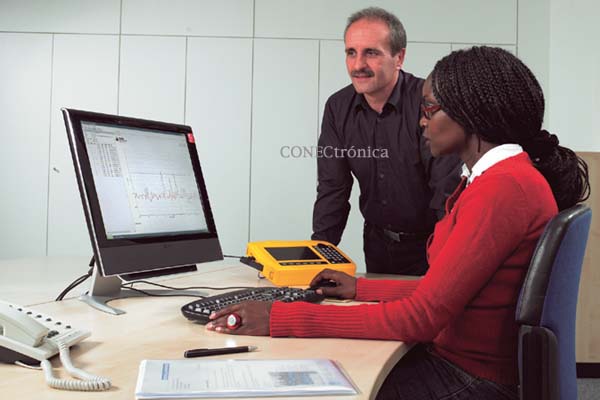
Electromagnetic radiation measurements intended to protect people and the environment often generate large amounts of data. All data acquired by the Narda Safety Test Solutions SRM-3006 selective meter can now be easily managed, analyzed, and stored using the
SRM 3006 TS PC software.
The database functions allow you to save results by project and measurement location. A separate data field contains additional information about the environment and measurement conditions, including GPS coordinates, map representations, and even voice comments recorded on-site.
All results can be analyzed afterward. For example, the software allows you to automatically search for peak values in the frequency spectrum or determine average values over a desired time interval. Integration functions within the user-specified frequency range automatically determine field exposure caused by a complete radio communication service, such as a GSM-1800 downlink, or by a specific operator. Furthermore, the analyses facilitate the identification of pilot channels and the use of individual extrapolation factors to determine maximum exposure when the transmitter is operating at full load.
The SRM-3006 TS software can import data from previous versions of the SRM-3006 and print results directly, or export them to Office applications using custom spreadsheets. Creating measurement reports tailored to project needs is now very simple.
This software is intended for radio transmitter and mobile communication system operators, regulatory bodies, and companies that offer measurement services.
SRM-3006
selective radiation meter from Narda Safety Test Solutions is specifically designed to measure electromagnetic fields in environmental and safety applications.
Using isotropic measurement antennas, the SRM-3006 covers a wide frequency range, from 9 kHz to 6 GHz. It is also ideal for studying the near-field region of longwave transmitters, taking measurements on radio and TV transmitters, and determining exposure levels from next-generation mobile telecommunications services.