Combined with changes in building construction, such as the increased use of prefabricated panels with integrated electronic functionality, the incorporation of technologies like these promises smart buildings that facilitate predictive maintenance, are more energy efficient, and respond to the needs of occupants.
Digital leak detection
Anyone who has ever had a water leak at home knows how incredibly disruptive and expensive it is, requiring the replacement of walls, ceilings, and floors. Furthermore, the affected area is unusable while everything dries out using extremely noisy fans and dehumidifiers. Clearly, technology that reduces the likelihood and severity of leaks would offer significant benefits to homeowners, businesses, and insurance companies alike.
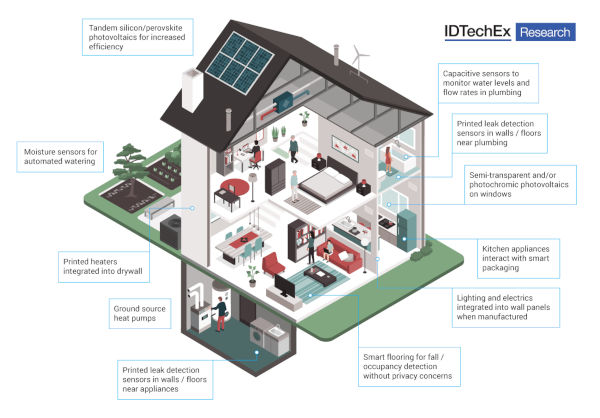
Printed moisture sensors are a promising potential solution that, if integrated into walls and floors, could detect leaks at a very early stage and alert the building owner. The Swedish company InviSense has developed such a system, primarily aimed at bathrooms. A printed RFID antenna coil is coated with a moisture-absorbing material. The resonant frequency changes in response to humidity, which can be detected by an RFID reader. While leak detection behind tiles can be performed non-destructively, it does not provide continuous information.
A British company is developing an alternative approach to leak detection. It offers low-cost capacitive sensors, made with carbon-based inks and capable of being produced using conventional graphic printers. The thin-film sensor format allows them to be placed under appliances such as dishwashers, washing machines, boilers, and pipes, or even under flooring or inside walls. Connected to the cloud, the sensors can alert homeowners when a rise in humidity is detected, enabling repairs before the leak becomes significant.
Integrated heating, lighting and wiring
Home construction techniques haven't changed substantially in many years, and most houses are still built on-site using conventional building materials. Plumbing and electrical systems are installed during the construction process, so skilled labor is required on every job site. While most cars have been manufactured for years on a largely automated production line, houses remain essentially handcrafted.
Therefore, there is an excellent opportunity to simultaneously reduce construction costs and provide added value to building occupants by integrating functionality into building materials. Promising examples include incorporating electric heaters into wall panels, thus eliminating the need for unsightly freestanding radiators. Electrical switches, wiring, lighting, and other types of sensors could also be installed in wall panels prior to installation, reducing the need for individual fixings that increase costs and create visual clutter.
Improved energy efficiency
Heating and powering homes more efficiently is crucial to meeting CO2 emissions targets, as households currently account for around 30% of emissions in developed countries. While greater adoption of established technologies, such as thicker wall and roof insulation, is important, there is also significant potential for emerging technologies to contribute.
Solar photovoltaic panels, currently installed on around 3.5% of UK homes, are a continuous target of innovation. One emerging approach is the construction of tandem photovoltaic cells, which use an additional light-absorbing layer to collect solar energy more efficiently.
However, rigid rooftop solar panels are not a viable option for all buildings. Another alternative is semi-transparent solar cells, which can be applied to windows in the form of thin sheets. Although less efficient, as they absorb significantly less light, semi-transparent solar cells allow existing windows to be used for energy harvesting. Another development, currently in its early stages, is photochromic photovoltaics, which would absorb a greater proportion of sunlight on sunny days.
Another frontier for the digital revolution
Buildings, both residential and commercial, have been slow to benefit from the digital revolution. There are many high-tech elements within buildings, but, in general, little modern technology is integrated into the building fabric itself. This is set to change in the coming years, with "smart buildings" enabling predictive maintenance, efficient construction, and the integration of sensors, heating, lighting, and energy harvesting into building materials from the outset.