The centralization of security systems is therefore becoming a key element in improving the response capacity of local police, emergency services, traffic control centers, and other municipal departments. Bringing together video, alarms, and operational data in a single environment allows for a more comprehensive view of what is happening, faster information sharing, and coordinated incident response.
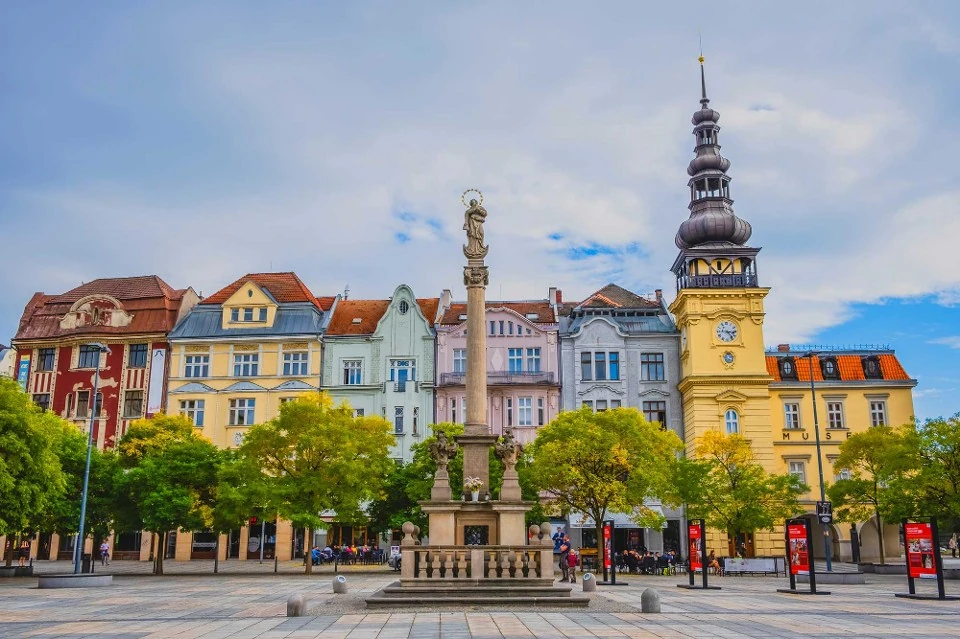
The city of Ostrava, one of the main urban centers of the Czech Republic, exemplifies this evolution. As part of its digital transformation strategy, the municipality has developed an integrated system that currently connects nearly 1,500 cameras and various security, traffic, and perimeter protection systems. Its long-term goal is to exceed 2,000 cameras.
From Independent Systems to a Shared Vision:
As Ostrava's video surveillance network grew, so did the need for improved coordination between different municipal services. The city had several systems operating independently, making it difficult to share information between organizations and manage an ever-expanding infrastructure in a consistent manner.
OVANET, Ostrava's ICT service provider and the city's metropolitan infrastructure manager, tackled the integration of these environments using Genetec Security Center. The platform enabled the creation of the Integrated Municipal Camera System (MIKS), from which previously separate systems are now managed centrally. "We needed a system that would give us complete visibility and control, facilitate access management, and allow us to continue expanding the infrastructure without adding complexity," explains Martin Flíbor, OVANET's Implementation Manager.
The platform's open architecture has allowed for the gradual integration of existing infrastructure and the maintenance of equipment from different manufacturers, preventing modernization from requiring the replacement of all previously deployed systems at once.
More than a dozen connected operations centers.
One of the main challenges of urban security is that the information needed to respond to an emergency is often scattered among different agencies. Police, traffic control, firefighters, and other municipal services may need to consult images or data related to the same incident.
In Ostrava, operators use the system 24 hours a day from more than a dozen operations centers, including municipal police stations, traffic control centers, and emergency services. From a single interface, they can access video, alarms, and other information necessary to assess a situation and make decisions. Other departments have restricted access only to data related to their responsibilities.
This organization also allows for different levels of permissions and maintains control over who can access specific information, an especially relevant aspect when centralizing systems used by multiple departments and public agencies. “Thanks to the unified Security Center platform, we now have a centralized view of the entire city system. This allows our teams to respond more quickly to incidents, and we have also significantly reduced our dependence on external providers,” says Martin Flíbor.
Measurable Impact on City Operations:
Centralization is having a measurable impact on city operations. Over the past year, the system has been involved in managing more than 4,260 incidents and has helped authorities identify 75 wanted individuals and arrest 21 suspects. The platform has also facilitated information sharing between the municipal police, fire department, and other departments, enabling a more coordinated response to incidents.
This experience reflects how the evolution of urban video surveillance is shifting the focus from simply installing cameras to the joint management of information. Ostrava is now continuing to expand this model. In fact, its upcoming projects include the integration of body cameras, mobile systems, digital acoustic detectors, and IoT sensors designed, among other functions, to monitor air quality and light pollution. The city is also introducing new video analytics capabilities and exploring cloud services to further expand its infrastructure. Among the planned initiatives is also the use of acoustic detection at public transport stops, along with analytical tools aimed at improving the early identification of potentially problematic situations in public spaces.
The Ostrava experience thus highlights one of the challenges that will accompany the evolution of connected cities: integrating technologies and organizations that have traditionally worked independently. As the number of devices deployed in urban spaces increases, having a shared vision can be as important as the cameras or sensors used to obtain it.
To discover more smart city solutions, visit Genetec at the Smart City Expo World Congress in Barcelona, at the DELL stand (Hall 2, No. 131), from November 3 to 5 at Fira Gran Via, Barcelona Conference Center.