According to a recent Deloitte report, hundreds of thousands of organizations will begin deploying private 5G networks in the next ten years as a result of the increased resilience of wireless devices, sensors, and artificial intelligence (AI) solutions.
Benefits for Businesses:
A private 5G network does not share traffic with other mobile networks. Therefore, it is a secure network that offers the ability to customize the solution and adapt it to the needs of businesses and customers (indoors and outdoors) in sectors such as distribution, healthcare, entertainment, manufacturing, transportation, and education.
With a private 5G network, public or private companies can personalize the 5G experience by providing improvements in speed, bandwidth capacity, security, and low-latency connectivity. Furthermore, these private networks can be deployed even if the location is not within a public 5G coverage area.
When building a private 5G network, organizations must acquire spectrum from public bodies, mobile network operators (MNOs), or other providers, as well as the necessary 5G equipment, including base stations and mini-towers from network infrastructure companies. This equipment will then connect to mobile phones, routers, or embedded modules.
Organizations can create their private 5G network “in-house” if they have the required knowledge and resources, or alternatively, entrust the process to mobile operators or system integrators.
Evolution of Private Mobile Networks:
The concept of private mobile networks has existed for some time, since the introduction of 4G LTE (Long Term Evolution) technology.
Although these Wi-Fi networks are low-cost and available on many devices, 4G wireless technology standards are not capable of supporting the requirements of organizations.
On the other hand, 5G supports transmission speeds up to one hundred times faster than 4G LTE.
In particular, manufacturing facilities demand levels of reliability, speed, and coverage that can be met by private 5G networks, which offer the opportunity to minimize cabling and achieve a safer and more mobile environment.
Deploying a private network in a factory also paves the way for the implementation of AI, machine learning (ML), and deep learning (DL) without disrupting the production line and supply chain.
The Challenges of Deploying Private 5G Networks:
During deployment, 5G devices, equipment, and applications must be able to operate on the wireless spectrum used by the network and integrate seamlessly. Therefore, it is essential to have the support of experienced companies and system integrators who can meet all the requirements.
Despite these challenges, leading companies in their sectors, such as Bosch, Ford, and Fujitsu, are investing in future-proof private 5G networks to maintain their competitiveness.
And, as deployment costs are likely to decrease with more available spectrum and more devices connected to the 5G ecosystem, the path will be paved for smaller manufacturers and SMEs to also benefit from private 5G networks.
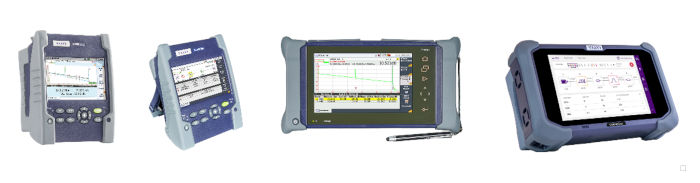
For all these reasons, it is clear that choosing trusted companies is crucial when deploying private 5G networks. Thus, Grupo COFITEL (www.cofitel.com), a company specializing in communications solutions, and its partner VIAVI Solutions have the most complete catalog of validation, verification, and visibility solutions for 5G private networks of any size.