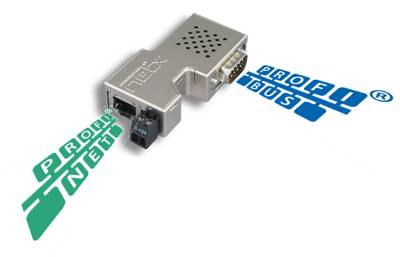
 Ethernet is currently gaining ground in the automation sector because it offers faster integration and better results, making capital investment in this field seem inevitable.
The increased productivity of systems through the use of new technologies is captivating end users. As is typical in this sector, automakers continue to improve, and PROFINET is already being openly discussed as the standard bus system of the future. Manufacturers who postpone upgrading to PROFINET will fall behind, but there are good reasons to hesitate. Specifications that are ten times more powerful, an unfamiliar protocol, and a new, more powerful processor present a risk to long-term resource development. Furthermore, the new unit has not been field-tested, and all certifications must be renewed. All of this generates a significant investment cost for companies that will only be recouped in the long term.
As a solution, NetLink PROXY integrates each PROFIBUS-DP slave into the PROFINET network immediately and completely. Designed like a standard PROFIBUS connector, it connects directly to the DP interface and plugs into the back of the Ethernet cable via an RJ45 connector. PROFIBUS supports up to 12 Mbaud, Ethernet supports 10/100 Mbaud, and features automatic crossover detection. Due to the short distance between the DP unit and the connector, no bus terminal resistor is required. It uses a 24V power supply, which can be drawn from the existing DP unit's power supply. The proxy is configured via a standard PC using the office network, or directly via PROFINET through the switch.
Commissioning typically takes 5 minutes. A PROFIBUS scan function detects the connected slave and automatically determines its configuration. Along with the slave's GSD file, the configuration is converted into a standardized GSDML file, which can be read by a configuration tool for the PROFINET controller. The subsequent download to the connector configures both sides of the network for continuous operation. Cyclic I/O data is protocol-switched according to the official ProXT guidelines of the PI user organization. The converter operates completely transparently during this process. The protocol conversion time is 2–5 ms, depending on the amount of data being converted. The transformation of non-cyclic DVP1 Read/Write/Clock services is supported. Furthermore, multiple NetLinks with identical configurations can operate in a PROFINET chain. The PROFINET station names are received by the DCP via the controller and its tool. This is particularly advantageous if the PROFIBUS units are delivered to the end customer already pre-assembled and pre-configured. In this way, the customer does not need to use the configuration tool; they only need to provide the associated GSDML file, assign the station names, and finally establish the physical PROFINET connection. Thus, the unit and equipment become part of the PROFIBUS network.
For more information or a quote, please contact us.