

Factory automation has a long history in communications. Twenty years ago, the only requirement for a fieldbus was to reliably transfer process data and precisely control devices. Over the years, requirements became more stringent with the increasing number of layers in processes, and some fieldbuses were unable to meet these demands.
Leading PROFIBUS developers, including Molex, have ensured that the standard has kept pace with progress. Through its Brad® automation brand, Molex has developed a comprehensive range of PROFIBUS solutions, including power cords, plugs, field-coupling connectors, I/O modules, PC and PLC interfaces, gateways, diagnostic tools, and simulation software. PROFIBUS remains the dominant fieldbus solution worldwide, and according to the Industrial Communications Community (PI or PROFIBUS) and PROFINET International, more than 20 million devices are installed in production plants globally. Typical applications in which Molex has been actively involved to date include messaging, supervisory human-machine interfaces (HMIs), real-time control systems, network and device bridges, physical connections in adverse environments, and input/output communications.
Today, production systems require a network that also allows data exchange between different processes and machines. This has led to protocols adopting ideas from other areas, such as telecommunications and networking—namely, the migration to the TCP/IP protocol. This enables computers, control systems, and machines to exchange information internally and externally within the company. It also eliminates barriers in the corporate environment, facilitating interaction between a wide range of applications.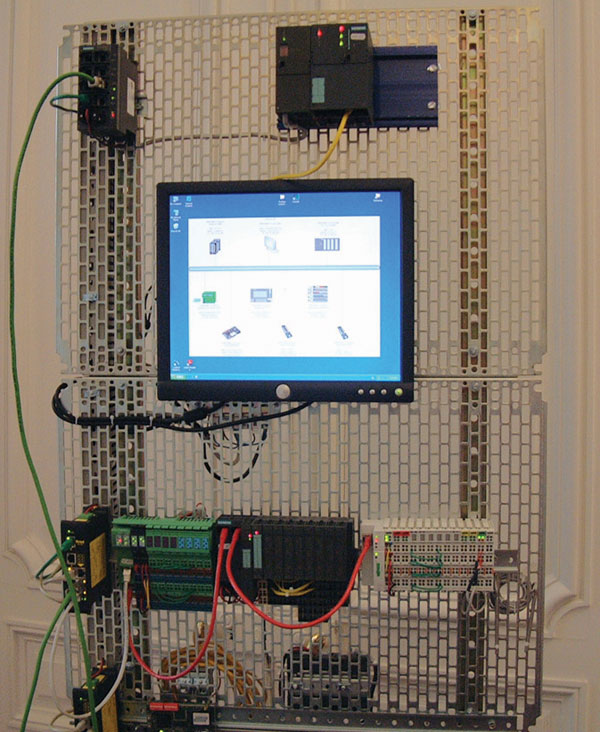 However, Ethernet, according to the IEEE 802.3 standard, is not suitable for the horizontal communication necessary for production because it can block network traffic even when another device needs to send an urgent message. This is why Industrial Ethernet was developed: a technology focused on factories, production, processing, and control, specifically designed for the industrial environment. It offers real-time communication, thus ensuring that every device connected to the network can receive and send data at any time.
First marketed in 2005, PROFINET is not just PROFIBUS for Ethernet; it offers much more. PROFINET uses similar concepts to PROFIBUS, but with more efficient use of network bandwidth, following a vendor-to-consumer communication model instead of the conventional master-slave solution. Furthermore, PROFINET offers more nodes (virtually unlimited), more data (a PROFINET frame has a maximum I/O of 1,440 bytes), higher speed (100 Mbps, full-duplex Ethernet), and, by the middle of next year, will comply with the IEEE 802.11 standard for wireless communications.
While some other fieldbuses have also benefited from the advantages of Industrial Ethernet, many offer only partial TCP/IP compatibility or, depending on how the network is implemented, do not fully comply with TCP/IP specifications. This means that devices such as a PC or laptop cannot be directly connected to the network. Furthermore, PROFINET is fully TCP/IP compatible, offering extensive industrial automation and real-time I/O networking, peer-to-peer (P2P) integration, motion control, enterprise-wide vertical integration, functional safety and reliability, and integration with conventional fieldbuses.
To date, the available integrated buses include PROFIBUS, Interbus-S, DeviceNet, serial communications, Modbus, AS-i, HART, and PROFIBUS PA, with full integration of FF and CC links planned. This has been achieved using proxy technology, which, by design and specification, acts as a gateway. It provides fieldbus connectivity to PROFINET for easy integration of existing solutions or products. With standardized mapping, these devices function as PROFINET devices. Transparent communication ensures that no special handling is required in the control application.
 So how does a proxy work? When using, for example, a PROFINET proxy for PROFIBUS on the Ethernet side, the proxy acts as a PROFINET device on Ethernet. In this case, the proxy represents all the PROFIBUS components on Ethernet and transfers all the data from the PROFIBUS slave to a PROFINET protocol. On the PROFIBUS side, the proxy acts as a DP master, cyclically exchanging data between the slaves and the DP master.
PROFINET's design is based on a modular structure. This allows integrators, from individual machine builders to automation engineers working on an entire production plant, to select cascaded functions. Along with PROFINET, there are two solutions: PROFINET CBA and PROFINET IO.
PROFINET CBA is suitable for component-based communication via TCP/IP and real-time communication, should the modular system engineering require it. Both communication options can be used in parallel to achieve true P2P integration. Furthermore, PROFINET IO has been developed for real-time (RT) and isochronous real-time (IRT) communication with distributed I/O devices. Both PROFINET CBA and PROFINET IO can communicate simultaneously on the same bus system. They can also operate independently or in combination, so that a PROFINET IO subsystem appears as a PROFINET CBA system from a system perspective.
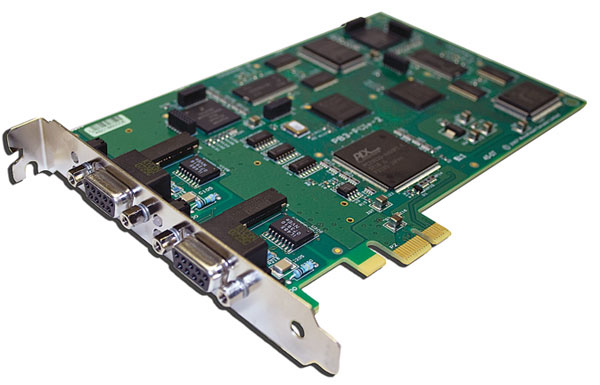
Since the inception of PROFIBUS in 1989, Molex has been and remains an active member of the PROFIBUS organization – now PI, or PROFIBUS and PROFINET International. The company also strongly promotes the use of PROFINET and actively participates in various working groups, including the core PROFINET IO group. Molex's product portfolio includes I/O device and controller kits, power cords, plugs, field-attach connectors, I/O modules, Ethernet switches, PCI and PCI Express interfaces, proxies, and gateways.
As a certified PROFINET competence center, test laboratory, and training center for Europe with locations in Italy and France, Molex utilizes a PROFINET demonstrator and offers product demonstrations, seminars, workshops, and technical support. PROFINET is particularly well-suited for use with equipment from various manufacturers, such as Siemens, Allen-Bradley, Omron, and Mitsubishi, as it utilizes different control platforms and numerous fieldbuses, including PROFINET, PROFIBUS, and DeviceNet. The demonstration wall explains how this is achieved using PROFINET RT and appropriate proxies.
For motion control, where speed and precise synchronization of I/O devices are required, PROFINET IRT is recommended. The concept of real-time Ethernet in isochronous mode is relatively easy to grasp: it relies on communication system programming that includes precise synchronization of separate cycles and time domains for processes with and without real-time requirements.
In summary: there is an open TCP/IP channel for standard data; the RT channel for high-performance transfer of cyclic data and event-driven signals; and the IRT channel for high-performance isochronous data transfer, minimizing jitter to less than 1 µs. The advantage of this motion control topology is that standard Ethernet devices can connect to the network at any point because the real-time domain is not closed. This is achieved using an enhanced real-time Ethernet controller model that integrates the IEEE 1588 standard for clock synchronization.
Safety, previously a cost factor, has become a strategy for improving productivity and reducing downtime. For this reason, a functional safety module called PROFIsafe has been incorporated into the PROFINET solution. This module covers safety-sensitive aspects of communication systems, such as addressing, monitoring timers, sequencing, signatures, etc., to ensure the protection of operators and capital equipment against hazards caused by production and machinery defects.
With 20 years of experience in the automation sector, Molex is ideally positioned to offer comprehensive technical support throughout the entire PROFINET integration project—from the implementation of the PROFINET stack and tools to the commissioning of PROFINET systems with appropriate test certification, including hardware and firmware deployment. Molex engineers' extensive know-how and long-standing experience will be invaluable in the transition from PROFIBUS to the advantages offered by PROFINET.





