When will this happen? Many IT experts believe that data center switch/server links will likely migrate to 40G within about five years. Even if it takes a bit longer, data center managers need to start thinking about a migration strategy today and not wait for line speed and bandwidth standards to expand easily. What does this mean for cabling? Among several standards, 40G is being developed for both copper and fiber. The biggest difference from previous transitions is the introduction of a new connector type for both. For fiber, MPO is the standardized multi-fiber connector instead of the traditional single-fiber connectors like SC or LC for 10G. For copper, the two-in-one GG45 connector is offered instead of the traditional RJ45. These two new connectors are also backward compatible with 10G Ethernet. From a customer perspective, this provides an easy migration path from the cabling infrastructure currently in place to support 10G to the future-proof 40G path.
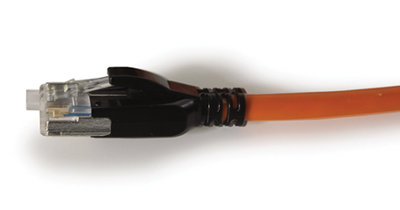 The new
LANmark-OF solution offers an easy migration path while eliminating traditional shortcomings.
The new Plug & Play solution offers a complete line of pre-finished and pre-tested assemblies to meet the current needs of data centers. The core of this system is the MPO (Multiple Fibre Push On) connector, where 12 fibers are connected simultaneously. This solution eliminates laborious on-site fusion splicing and reduces installation time by 80%. It is easy to configure without the need for special patch cables or cassette arrays at the operational level, offers easy maintenance, and facilitates rapid changes in data centers. The IEEE has already finalized the specifications for 40G over fiber. This standard specifies parallel optics in OM3 or OM4 cable with MPO connectors. This is the first time Ethernet will use multiple parallel fibers instead of two fibers for transmit/receive, and this raises many issues when upgrading a cabling infrastructure. Nexans' MPO solution offers an easy 10G to 40G upgrade path that takes all of this into account: simply replace the Plug & Play cassettes with MPO adapter boards and connect to the active equipment using MPO patch cables. There's no need to replace existing structured cabling between racks: the MPO-MPO Preterm provides the cable and connectivity for the parallel optics required by 40G.
Nexans has developed a low-loss MPO solution for the 40G upgrade path with a guaranteed maximum insertion loss of 0.35 dB for each fiber in the MPO connection. This advanced solution allows for common data center configurations such as cross-connects or daisy-chain links while meeting the demanding 1.9 dB channel insertion loss specified by the IEEE. 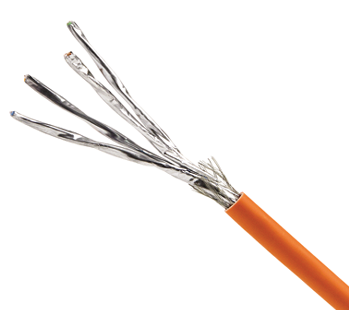 In short, the Nexans solution enables rapid mass deployment for current 10G applications, with a configuration that easily supports parallel optic designs and is 40G Ethernet ready.
Now, there is a copper alternative.
Regarding copper infrastructure, short-link InfiniBand cable is available to support 40G over very limited distances. But if we consider newer technologies like Converged Enhanced Ethernet, which has the potential to replace InfiniBand, Fibre Channel, and older Ethernet platforms and push Ethernet everywhere, a single structured cabling platform supporting 1 to 40G up to 100 meters would be needed. The 100m length is significant because it would require greater design flexibility to reduce conflict points, among other impediments, and the ability to support 100m would obviously be ideal if any upgrade is planned today.
With the launch last year of the LANmark-7A GG45 copper cabling solution, Nexans is testing the limits of frequency ranges up to 1,000 MHz. This revolutionizes the perception of copper longevity in Ethernet cabling and offers network architects and administrators greater diversity in their cabling system choices.
This combination of Cat 7A cabling with the high-speed GG45 connector is aimed at the imminent 40G market. With the focus shifting towards fiber due to the increasing demand for bandwidth, a 40G copper solution might seem surprising. Copper has always been considered unsuitable for transmitting 10G over long distances. The main deterrent was the need to support these high-speed signals using twisted-pair components while maintaining backward compatibility with conventional RJ45 connectors with minimal crosstalk.
Nexans has overcome these barriers with its LANmark-7A/GG45 system, which is 40G Ethernet-ready and also fully backward compatible thanks to the GG45's ability to accommodate RJ45 connectors, offering twice the bandwidth with half the crosstalk of Cat 6A. The GG45 standard has been ratified by the IEC (International Electrotechnical Commission) as the Cat 7A interface. Independent research from America's Penn State University has established that
a transfer capacity of >40G over 100m is possible based on the electrical parameters of the new LANmark-7A system. Backward compatibility protects investments in existing equipment, making this solution a highly efficient migration path to 40G speeds.
Today, high-speed service providers and the data centers that support them have multiple options for developing a realistic and cost-effective migration strategy to 40G or beyond, thanks to LANmark fiber and copper solutions.
Author:
Jesús Román, Commercial Director Iberia, Nexans Cabling Solutions