As the popularity of esports skyrockets worldwide, Riot Games is developing a global production system to produce live events anytime, anywhere from centralized production data centers. Its new Broadcast and Content Production Center (RBC) in Dublin, Ireland, is the first of several to be built and interconnected to provide a seamless global production model where each RBC will produce multiple events simultaneously based on time zone requirements. Nevion is providing the solution to coordinate media flows between remote venues and the RBC via Riot Direct, Riot's wide area network (WAN).
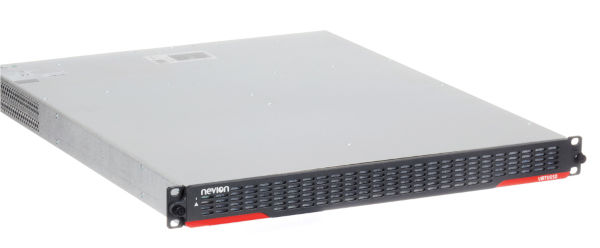
The solution will be built around Nevion's Virtuoso software-defined multimedia node and its SDN coordination and control software, VideoIPath.
Virtuoso will be deployed in SMPTE ST 2110 compliant data centers and in mobile contribution kits, which will be moved to event locations as needed. The nodes will offer various multimedia functions for transporting streams across the network, including SDI/SMPTE ST 2110 adaptation, low-latency JPEG XS video compression, MADI transport and processing, and IPME (IP media edge) functionality for LAN-to-WAN transfer, multicast-to-unicast conversion, and stream protection.
Riot first implemented Nevion Virtuoso with JPEG XS in the remote production of the 2019 League of Legends World Championship Finals, one of the world's first uses of the compression technology. This year, Riot successfully completed the integration of MADI over IP/SMPTE ST ST2110 between Los Angeles and Reykjavik during the League of Legends World Championship in Iceland.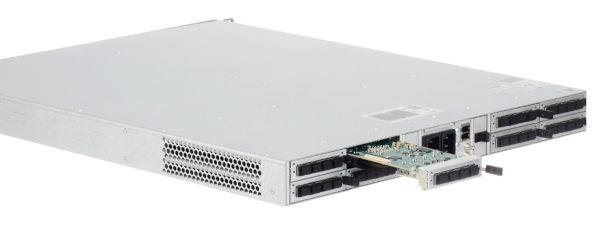
VideoIPath serves as a single coordination layer for WAN media connectivity, enabling Riot to quickly connect contribution kits to its centralized production infrastructure in data centers.
For this reason, VideoIPath will provide a dynamic connection and coordinate all multimedia streams through meticulous bandwidth management and optimization. It will also configure Virtuoso multimedia node adaptation, JPEG XS compression, and stream protection to suit different production requirements, with integrated service-level control.
Scott Adametz, Riot Games' senior director of infrastructure engineering, explains: "We're embarking on an ambitious plan to develop new production and operations workflows to support our growth from a single-game esports company to a multi-game future. Having worked with Nevion for a couple of years, we knew their products and expertise would allow us to develop an IP solution that would bring greater overall efficiency to our esports productions."