Security incidents often span multiple facilities, campuses, and geographic locations. They rely on recordings and data from tens or even thousands of cameras and devices from various vendors. Meanwhile, investigators typically begin with limited or incomplete information. Closed systems designed for single-vendor environments, combined with the disconnected nature of traditional tools, make it difficult for teams to move quickly as investigations expand across different locations, systems, and camera brands.
Building on the intelligent search capabilities introduced last year, Genetec offers an investigative experience that enables teams to work more efficiently in complex environments. By keeping evidence, decisions, and contextual information connected from the initial incident report to case closure, investigators avoid restarting searches or duplicating work as they progress through their activities.
“When an incident occurs, security teams must act quickly and follow the investigation as it evolves, even with limited initial details,” commented Anne-Cécile Millot-Tournier, Product Group Director, Intelligent Automation, Genetec Inc.“Unlike tools designed for closed, single-vendor systems, the new capabilities integrated into Security Center SaaS are designed for enterprise environments, allowing teams to work with thousands of cameras, multiple locations, and mixed ecosystems without switching systems or launching separate searches as new contacts arise.”
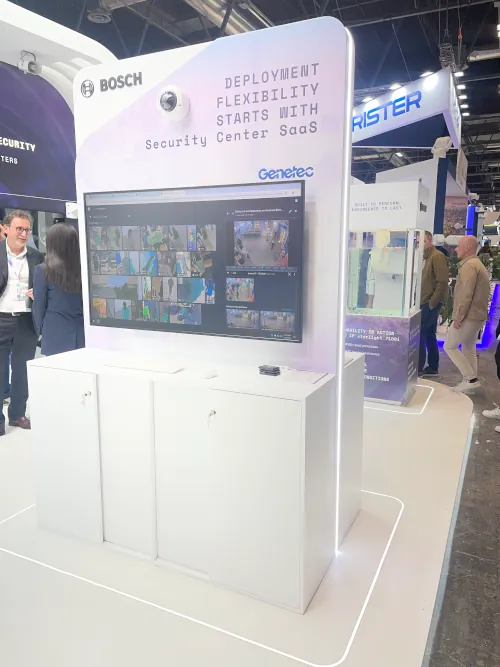
Find evidence quickly and connect the evidence more quickly
Investigations in Security Center SaaS are designed around how operators actually work. An investigation might begin with a brief incident report and limited details, such as an approximate time or a partial description of the assailant's clothing, like a brand logo. Using AI-enhanced natural language searches, investigators can turn everyday descriptions into actionable searches across video feeds from multiple sites and camera brands, and then narrow down the results using contextual clues such as location, nearby activity, and what happened before and after an event.
As relevant images are identified, findings can be validated and refined using a timeline preview. This allows investigators to quickly scan video, confirm key moments, and narrow down time ranges without loading or reviewing entire recordings. From there, investigators can track people, vehicles, and objects through scenes, visualize movement using trajectory analysis, and understand how events unfolded over time, without having to review hours of video footage.
As the investigation progresses, evidence can be consolidated into a case, allowing for a comprehensive understanding of the incident. Video clips, snapshots, and related material can be automatically organized chronologically, enriched with contextual information and tags, and presented as a coherent narrative that shows how events connect. As part of the evolving investigation experience through Security Center SaaS, AI-assisted capabilities, including automated video summaries, help investigators quickly document what was captured, facilitating the finalization of findings, the sharing of results with stakeholders, and the efficient closure of cases.
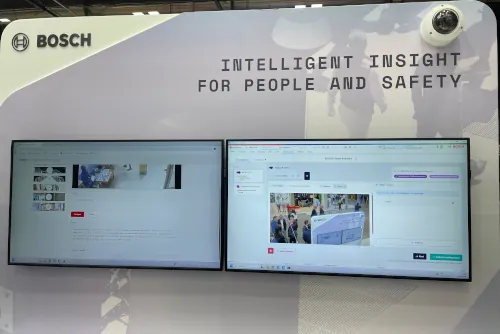
A research experience built for large-scale security facilities
The new capabilities bring together tools such as natural language search, similarity detection, entry and exit detection, contextual analysis, visual path search, and case and evidence management into a unified investigative experience. Security professionals can seamlessly move from real-time monitoring to active investigation, gather and review evidence, and securely share trusted findings with internal and external stakeholders, all from a single interface.
Starting this month, Security Center SaaS users will receive new investigation capabilities, with additional features being rolled out continuously. These capabilities will help organizations reduce investigation time from hours to minutes and return to daily operations more quickly once incidents are resolved, while maintaining transparency and operator control over how conclusions are reached.