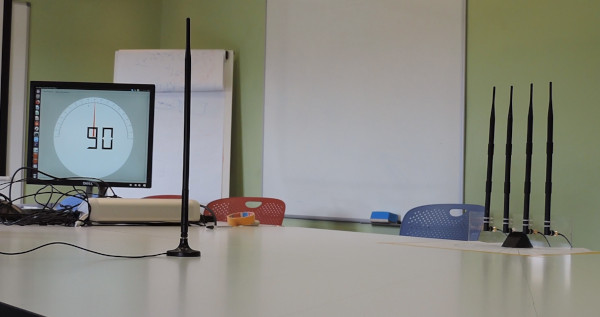
The recently completed project was a collaboration between Huawei Technologies and the IMDEA Networks Institute, the Madrid-based research organization that has pioneered many technologies currently being developed in the new 5G environment.
Dr. Joerg Widmer, principal investigator of the project and Director of Research at IMDEA Networks, describes the challenge this group tackled: “Signal loss increases significantly with frequency. Therefore, High Frequency (HF) communications, such as millimeter wave systems that provide the speed and capacity required by 5G and Wi-Fi networks using the 802.11ad standard, demand directional antennas to overcome the resulting attenuation. This translates into high signal overhead, as both ends of the communication must continuously update their antenna orientation as nodes move and obstructions interrupt the line of sight.” These problems are avoided in low-frequency (LF) networks, given their multi-path environment and their much lower attenuation rates.
“We have explored how to use low-frequency bands to infer channel characteristics from high-frequency millimeter-wave bands and to support the network with beam tracking, angle-of-arrival estimation, and location information. By studying this approach and other LF-HF channel correlations that allow LF to support HF, we have been able to develop techniques that improve millimeter-wave band performance and reduce the overhead at the control level required to operate such a network. During the experimental phase of the project, we have demonstrated that the mechanisms and algorithms we have developed not only work in theory but also in real-world wireless network environments.”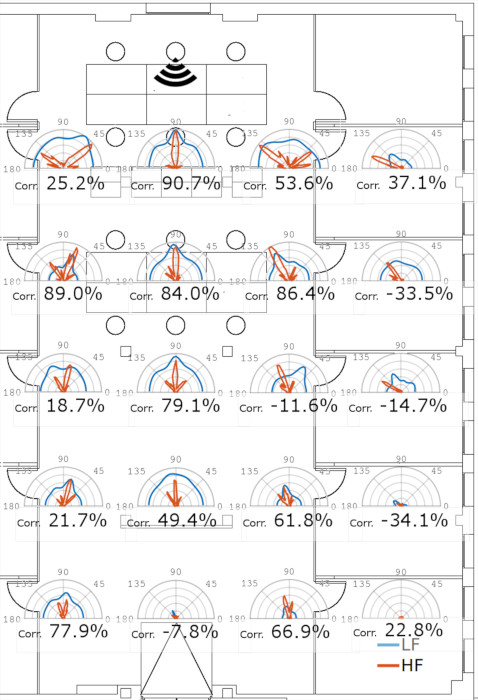
Widmer is very clear about the project’s significance. “To our knowledge, this is the first time these two systems have been studied together in depth.” Our team of experts has achieved some truly exciting results developing techniques that will allow operators to improve the performance of their millimeter wave band and, consequently, reduce the network overhead required to operate their current and future networks. Our work has already resulted in two patented applications, and the feasibility of a third is currently being evaluated. “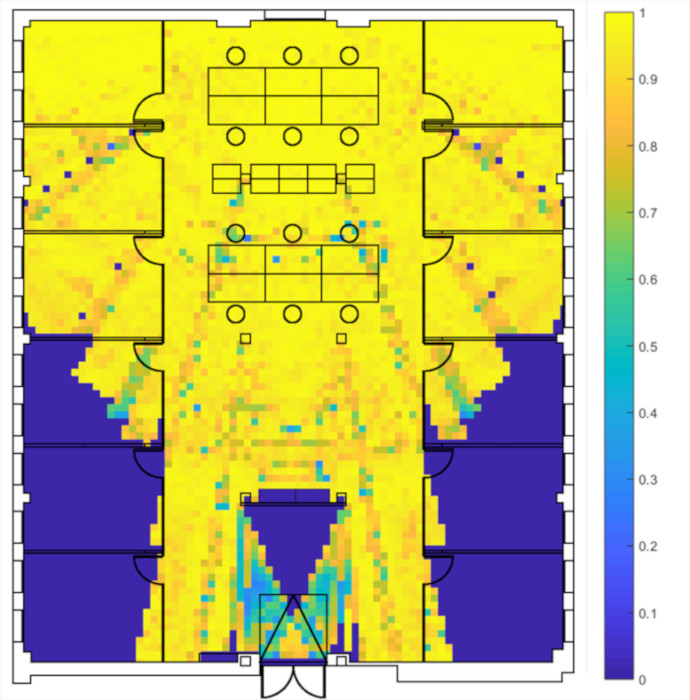 One of the most significant challenges was studying channel correlation to enable LF to assist HF,” Widmer continues. “In this study, we assessed countless variables, such as scenarios, signal energy and delay, the number of paths, and the number of antennas in each system. The IMDEA Networks team comprised researchers with expertise in mathematical and programming languages, materials physics, radio frequency propagation, and communication standards. The application of this diverse range of specialized knowledge, combined with our wealth of technical resources, has been instrumental in ensuring the project's success.”
Bibliographic References:
Pablo Jimenez Mateo, Alejandro Blanco, Norbert Ludant, Matteo Marugan Borelli, Amanda
García-García, Adrian Loch, Zhenyu Shi, Yi Wang, Joerg Widmer (February 2019)
A Comprehensive Study of Low Frequency and High Frequency Channel Correlation [PDF ]
In: International Conference on Computing, Networking and Communications (ICNC 2019), 18-21 February 2019, Honolulu, Hawaii, USA.